

FPC Updates

Southeast United States
Learn about events, projects,
field work, and more.

Latin America
Learn about events, projects,
field work, and more.

Technology Updates
Get familiar with tools and resources available to members.

Grad Student Highlights
Meet our students and learn about all their work
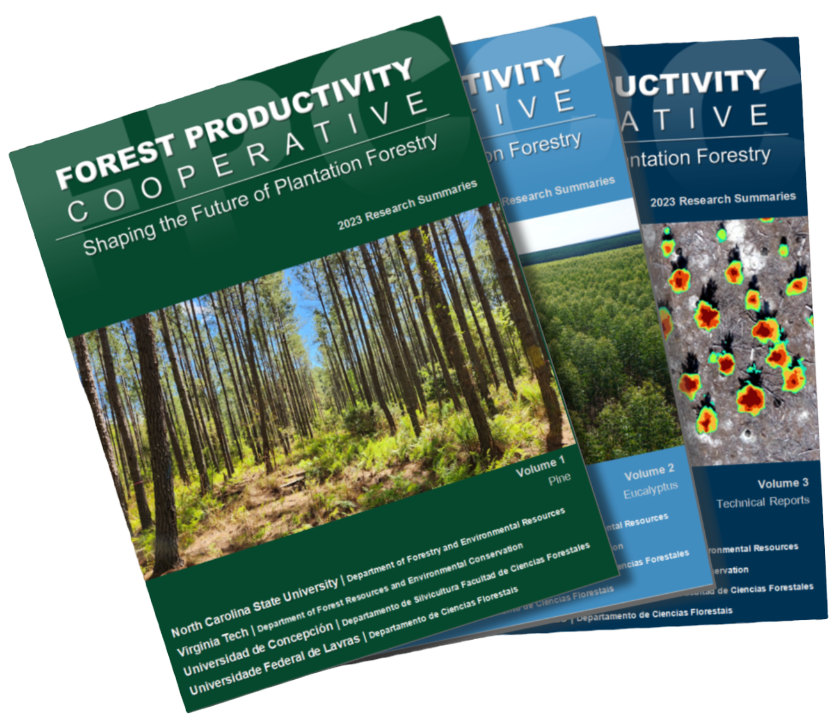
New Publication Highlights
-
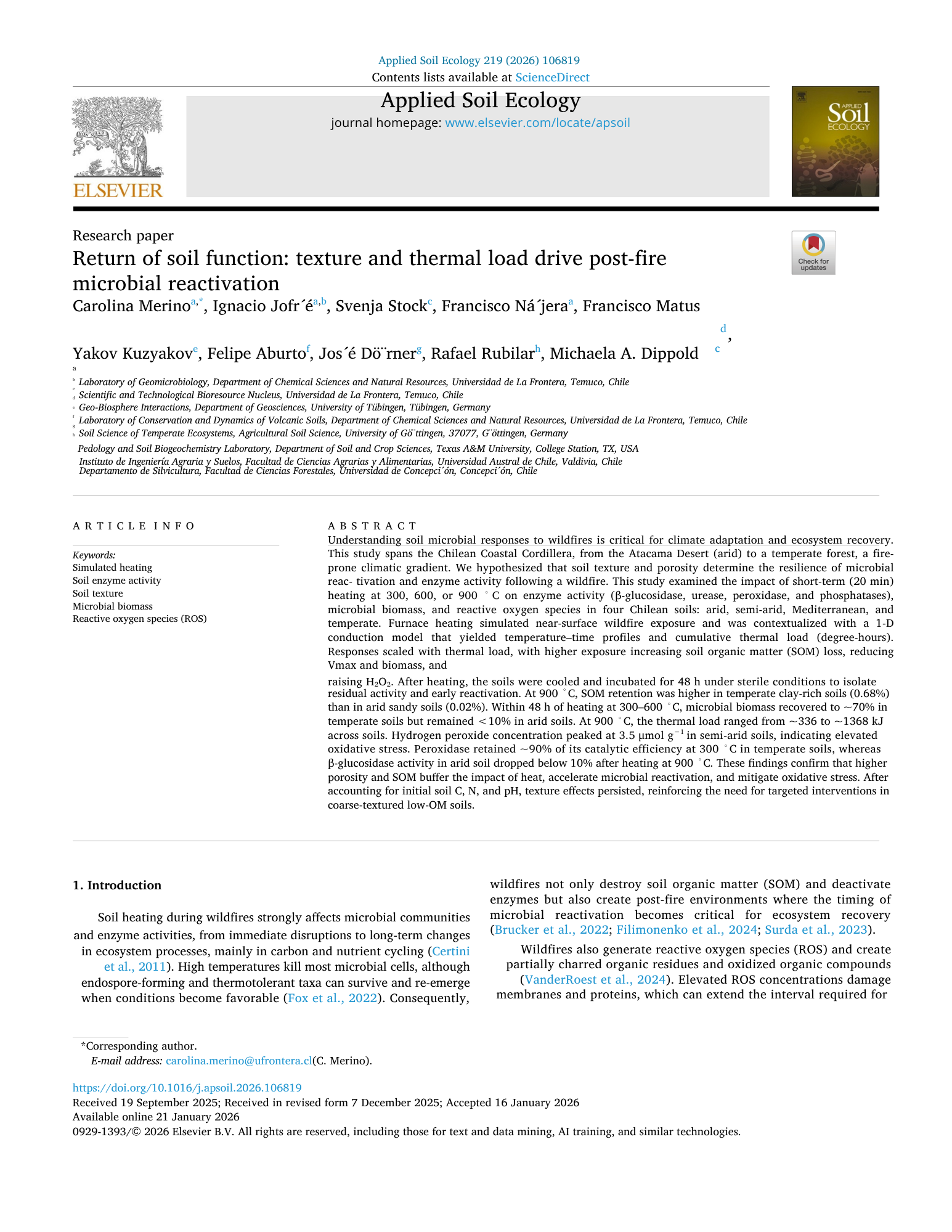
Understanding soil microbial responses to wildfires is critical for climate adaptation and ecosystem recovery. This study spans the Chilean Coastal Cordillera, from the Atacama Desert (arid) to a temperate forest, a fire-prone climatic gradient. We hypothesized that soil texture and porosity determine the resilience of microbial reac tivation and enzyme activity following a wildfire. This study examined the impact of short-term (20 min) heating at 300, 600, or 900 ◦C on enzyme activity (β-glucosidase, urease, peroxidase, and phosphatases), microbial biomass, and reactive oxygen species in four Chilean soils: arid, semi-arid, Mediterranean, and temperate. Furnace heating simulated near-surface wildfire exposure and was contextualized with a 1-D conduction model that yielded temperature–time profiles and cumulative thermal load (degree-hours). Responses scaled with thermal load, with higher exposure increasing soil organic matter (SOM) loss, reducing Vmax and biomass, and raising H2O2. After heating, the soils were cooled and incubated for 48 h under sterile conditions to isolate residual activity and early reactivation. At 900 ◦C, SOM retention was higher in temperate clay-rich soils (0.68%) than in arid sandy soils (0.02%). Within 48 h of heating at 300–600 ◦C, microbial biomass recovered to ~70% in temperate soils but remained <10% in arid soils. At 900 ◦C, the thermal load ranged from ~336 to ~1368 kJ across soils. Hydrogen peroxide concentration peaked at 3.5 μmol g- 1 in semi-arid soils, indicating elevated oxidative stress. Peroxidase retained ~90% of its catalytic efficiency at 300 ◦C in temperate soils, whereas β-glucosidase activity in arid soil dropped below 10% after heating at 900 ◦C. These findings confirm that higher porosity and SOM buffer the impact of heat, accelerate microbial reactivation, and mitigate oxidative stress. After accounting for initial soil C, N, and pH, texture effects persisted, reinforcing the need for targeted interventions in coarse-textured low-OM soils.
-
Carolina Merino:
-
Merino C, Jofré I, Stock S, Nájera F, Matus F, Kuzyakov Y, Aburto F, Dörner J, Rubilar R, Dippol MA. 2026. Return of soil function: texture and thermal load drive post-fire microbial reactivation. Applied Soil Ecology. 219: 106819. DOI: https://doi.org/10.1016/j.apsoil.2026.106819
-
Simulated heating
Soil enzyme activity
Soil texture
Microbial biomass
Reactive oxygen species (ROS
-
Post-fire recovery depends on heat dose and thermal load predicts SOM loss.
In 48 h, clay-rich temperate soils regain ∼70% biomass; arid sands <10%.
Porosity protects and clays buffer heat, keep enzymes active, speed reactivation.
In arid sands oxidants surge and functions crash; at 900 °C signals are residual.
-
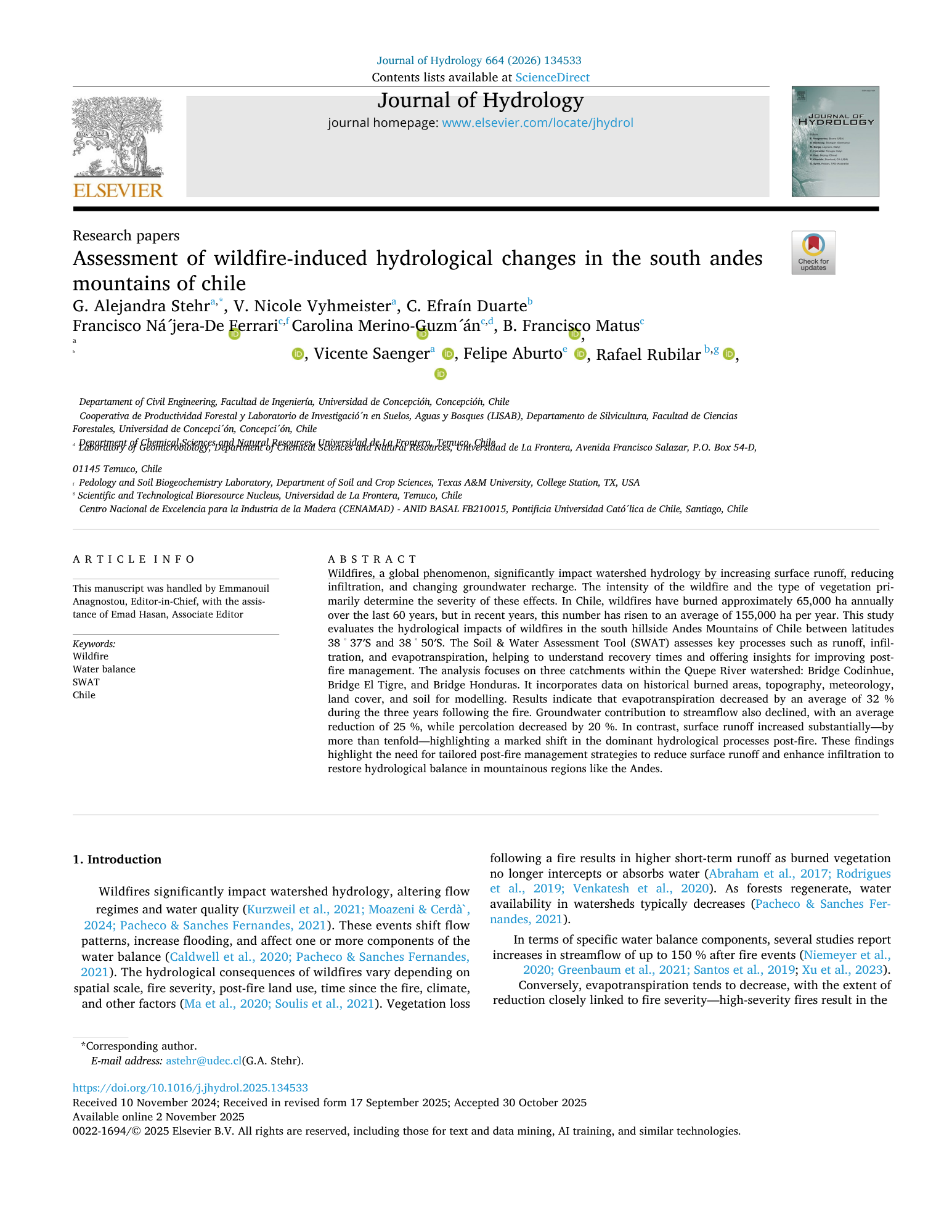
Wildfires, a global phenomenon, significantly impact watershed hydrology by increasing surface runoff, reducing infiltration, and changing groundwater recharge. The intensity of the wildfire and the type of vegetation pri marily determine the severity of these effects. In Chile, wildfires have burned approximately 65,000 ha annually over the last 60 years, but in recent years, this number has risen to an average of 155,000 ha per year. This study evaluates the hydrological impacts of wildfires in the south hillside Andes Mountains of Chile between latitudes 38◦37′S and 38◦50′S. The Soil & Water Assessment Tool (SWAT) assesses key processes such as runoff, infil tration, and evapotranspiration, helping to understand recovery times and offering insights for improving postfire management. The analysis focuses on three catchments within the Quepe River watershed: Bridge Codinhue, Bridge El Tigre, and Bridge Honduras. It incorporates data on historical burned areas, topography, meteorology, land cover, and soil for modelling. Results indicate that evapotranspiration decreased by an average of 32 % during the three years following the fire. Groundwater contribution to streamflow also declined, with an average reduction of 25 %, while percolation decreased by 20 %. In contrast, surface runoff increased substantially—by more than tenfold—highlighting a marked shift in the dominant hydrological processes post-fire. These findings highlight the need for tailored post-fire management strategies to reduce surface runoff and enhance infiltration to restore hydrological balance in mountainous regions like the Andes.
-
G. Alejandra Stehr:
-
Stehr GA, Vyhmeister VN, Duarte CE, Ferrari FN, Saenger V, Aburto F, Rubilar R, Merino-Guzmán C, Matus BF. 2026. Assessment of wildfire-induced hydrological changes in the south Andes mountains of Chile. Journal of Hydrology. 664(C): 134533. DOI: https://doi.org/10.1016/j.jhydrol.2025.134533.
-
Wildfire
Water balance
SWAT
Chile
-
SWAT model simulates wildfire impacts on Andean watershed hydrology.
Wildfire increases runoff, reduces groundwater recharge, alters water balance.
Sub-basin recovery varies, highlighting need for tailored post-fire management.
Study informs sustainable water strategies in fire-prone mountain regions.
Key hydrological changes aid in understanding wildfire effects on water cycles.
