


Research
Regionwide Trials
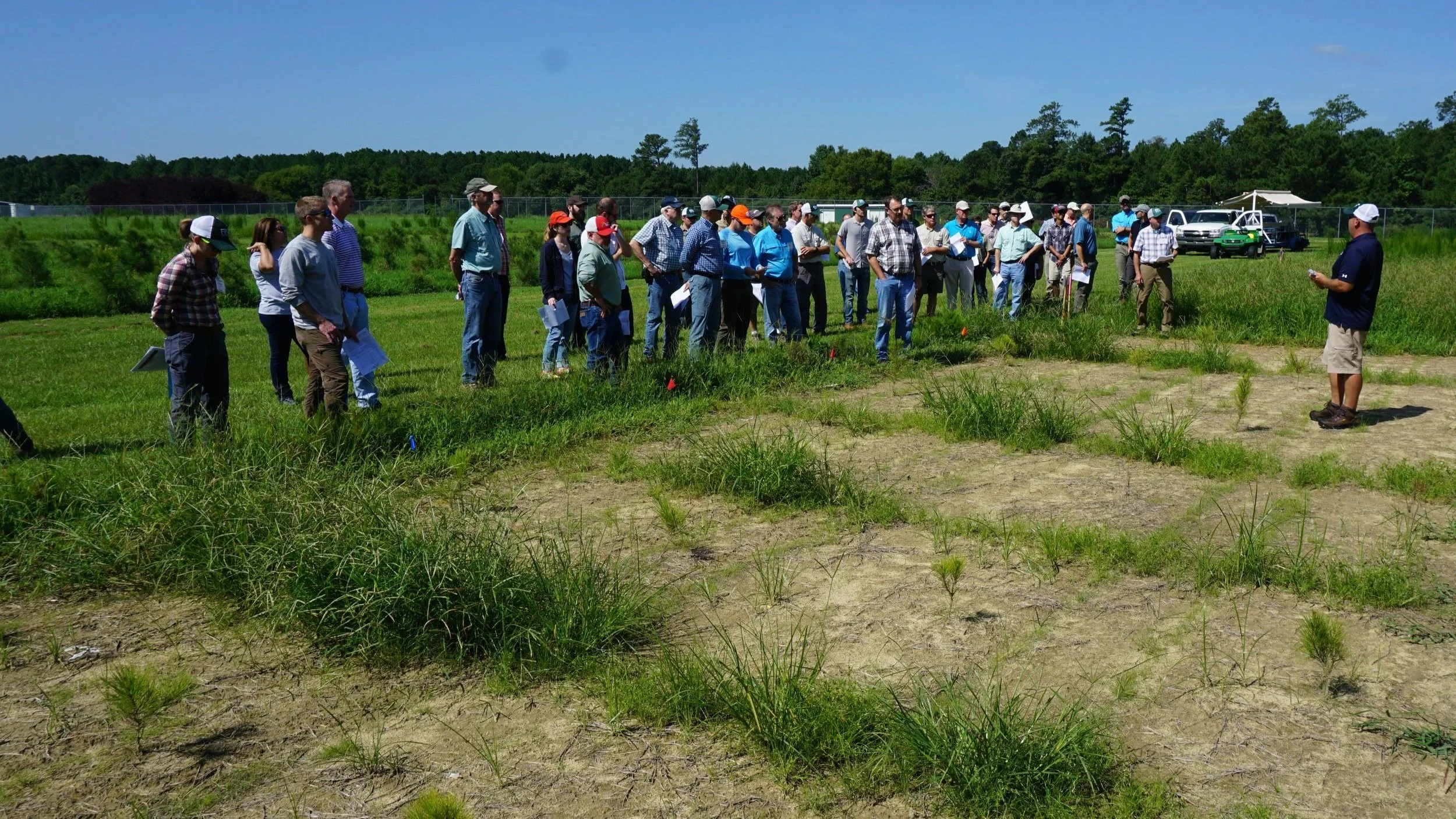
Since 1970, FPC members have established over 350 installations of 28 “Regionwide” studies in the southeast US, Argentina, Chile, Uruguay, and Colombia. Studies are focused on a few important questions that are more effectively answered by members cooperating rather than competing. Most studies examine several silvicultural treatments, providing an opportunity to better understand interactions among treatments. All studies include multiple installations across a range of soil/site types where treatments are replicated at least twice on each site. Data from these studies provide the basis for estimating responses to silvicultural treatments, developing prescription guidelines, and parameterizing growth models.

Special Studies
The foundation of our research continues to be field studies examining the effects of silvicultural treatments applied during stand establishment (e.g., soil tillage, vegetation management, fertilization) and in established stands (e.g., thinning, fertilization, woody vegetation control) on stand growth and nutrition. FPC staff and collaborators often complete research outside the regional scope and answer some of these questions.

Research Priorities
The priorities identified by our members include a mixture of applied and basic research that has been a hallmark of the FPC for several decades. Much of the research subjects identified are relevant to a wide variety of pine and hardwood species in both the United States and Latin America. The mixture of empirical and process-based work conducted by the FPC enables us to extrapolate research from one region to another and from one species to another, increasing the efficiency of the research efforts of the FPC and the value of the program to the members.
Southeast US Working Group Research Priorities (2025-2030)
Vegetation Management.
Evergreen and deciduous understory detection, quantification, and classification
Duration and intensity of control to achieve max efficiency with minimal treatments
Density Management
Interactions with Veg Control, Fertilization, and Genetics
Plantation design – layout, configuration, and orientation
Site-specific Silvicultural Management
Refine LAI baseline and change detection for silvicultural prescriptions and response.
Refine and improve SPOT map quality and accessibility.
Fertilization rate and timing to achieve max efficiency with minimal treatments.
ECM fungal inoculations for increased productivity


Latin America Pine & Eucalyptus Research Priorities
Increasing plantation productivity by managing water availability, understanding water and nutrient interaction demands and water use efficiency, and use of pine and eucalyptus plantations
Remote sensing applications for forest health, establishment phase, and inventory
Adaptation of plantations to climate change: Environment x Silviculture x Genetic interactions/opportunities
Maximizing response to nutrient additions and soil specific responses
Remote sensing tools to evaluate forest health and productivity
Fundamental research to address eucalyptus water and carbon sustainability and balance under climate change
Eucalyptus coppice management & nutrition
Correction of stem deformation using nutritional amendments on intensively managed pine plantations
Modelling site above and belowground forest carbon stock and its long term maintenance
